
DIN 66399 Security Levels
A shredder's security is measured by its P level under DIN 66399. See the levels on an A4 page, then choose the right level and machine for your documents.
DIN 66399 defines shredding security in seven levels, P-1 to P-7, based on the size of the particles the paper is cut into. P-1 and P-2 are strip cut; at P-4 a particle is at most 160 mm², at P-5 30 mm² and at P-7 5 mm². The levels are grouped into three protection classes. For documents containing personal data, the manufacturer recommendation is P-4 or higher; for highly sensitive data, P-5 to P-7 is used.
What do the P levels look like on an A4 page?
Change the level: the drawing shows an A4 page cut into the largest particle allowed at that level. The magnifier zooms in on the line with the name and ID number to show how many pieces it is split into.
Security level
P-4
Cross (confetti) cut
- Largest particle
- 160 mm²
- Particle width
- max. 6 mm
- A4 page
- ≥ 390 pieces
- Protection class
- 2
Particle max. 160 mm², width max. 6 mm; strip cut not allowed.
Mühlen has 15 models at this level
The drawing is illustrative: each level is drawn with the largest particle size allowed (e.g. 4 × 40 mm for P-4). The actual cut size of each machine is stated on its product page. A4 area 62,370 mm².
Choose the right level and machine for your documents
Select the document you will destroy and how intensively you will shred. The recommendation follows the DIN 66399 protection classes; machines are listed by their registered DIN level and usage class.
1What will you destroy?
2How much will you shred?
Protection class 2 (High protection need · confidential data): DIN 66399 uses levels P-3 – P-5 in this class. Example: information affecting a person, such as account balances, school reports and references.
For personal data, the manufacturer recommends cross-cut P-4 or higher.
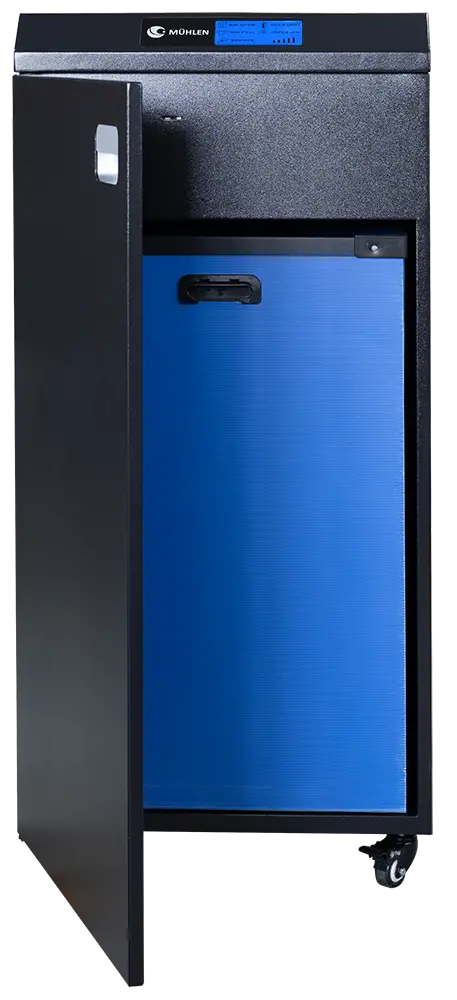 DIN P-4Mühlen Pro 162LT-CMega-Size Cross-Cut Paper Shredder35-sheet capacity per passShreds A3 documents, CDs and cards60 minutes of continuous operationView
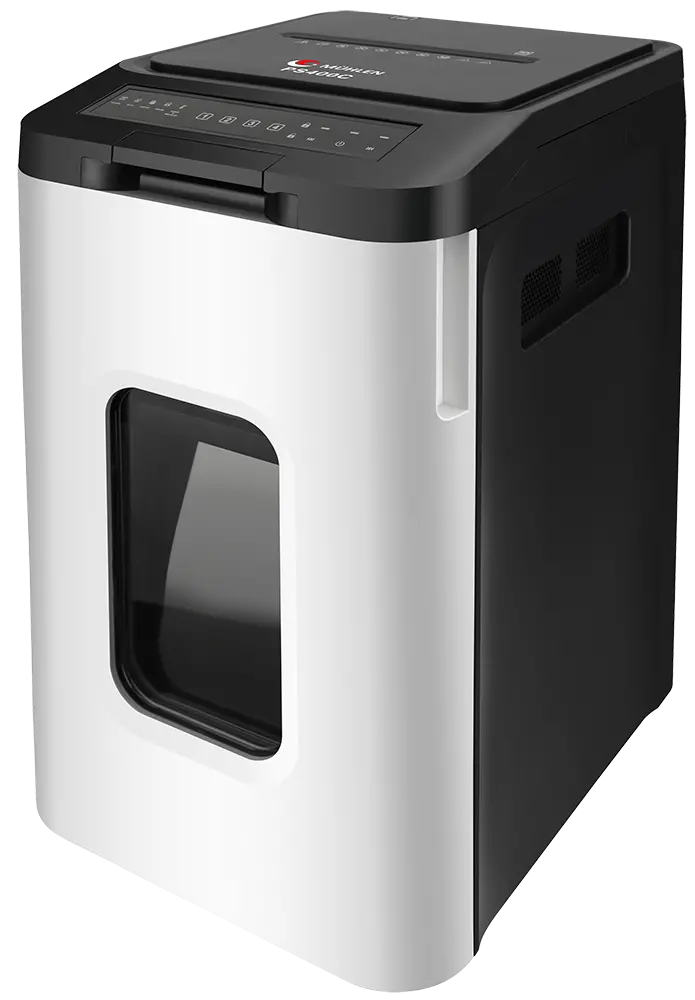 DIN P-4Mühlen PS-400-CAuto-Feed Paper ShredderBin lock prevents unauthorized accessSensor-controlled automatic start/stopDuty cycle: 240/45 minView
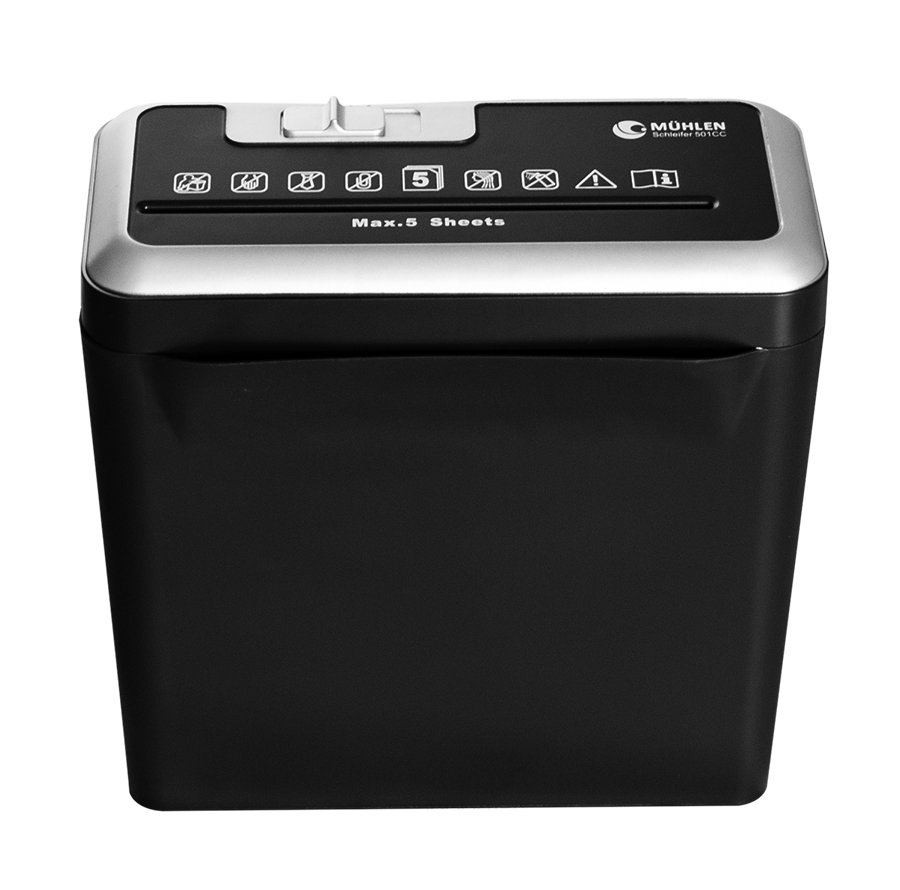 DIN P-4Mühlen Mini 501CCPersonal Mini Paper ShredderPersonal, portable, stylish and creative designConfetti/cross-cut 4x40 mm (DIN S4)Shreds 2.20 meters of paper per minuteView
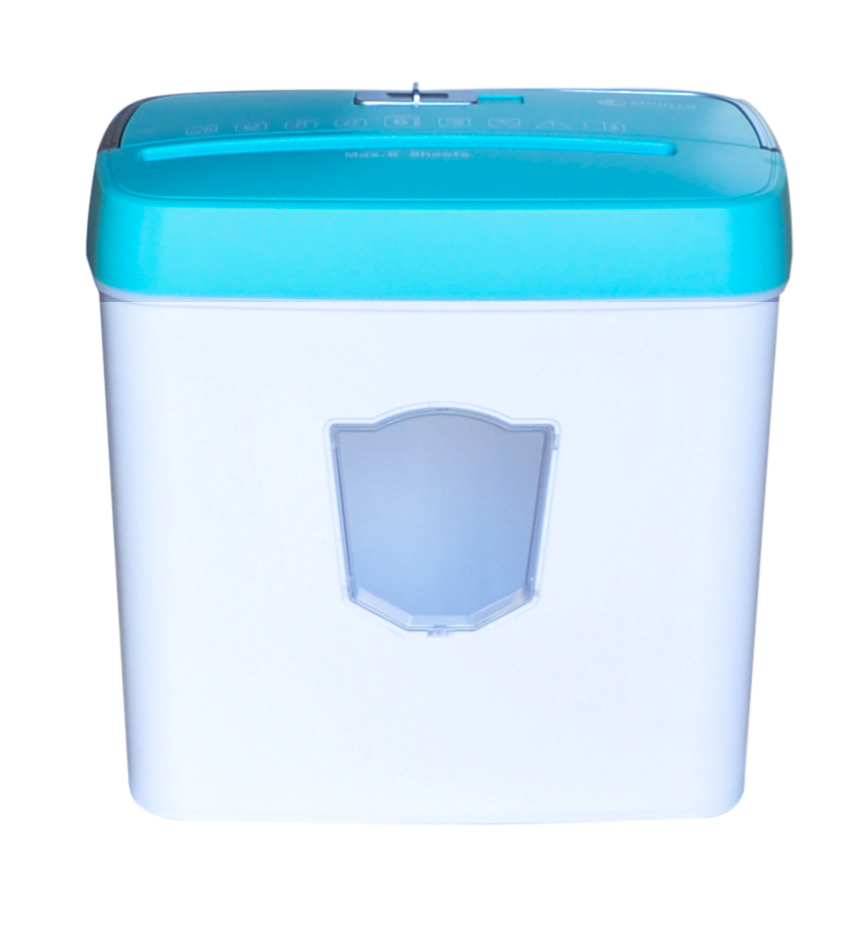 DIN P-4MÜHLEN Mini 509CCPortable Mini Paper ShredderCompact, stylish design for personal useShreds more than 100 sheets per minuteAutomatic feeding and shreddingView
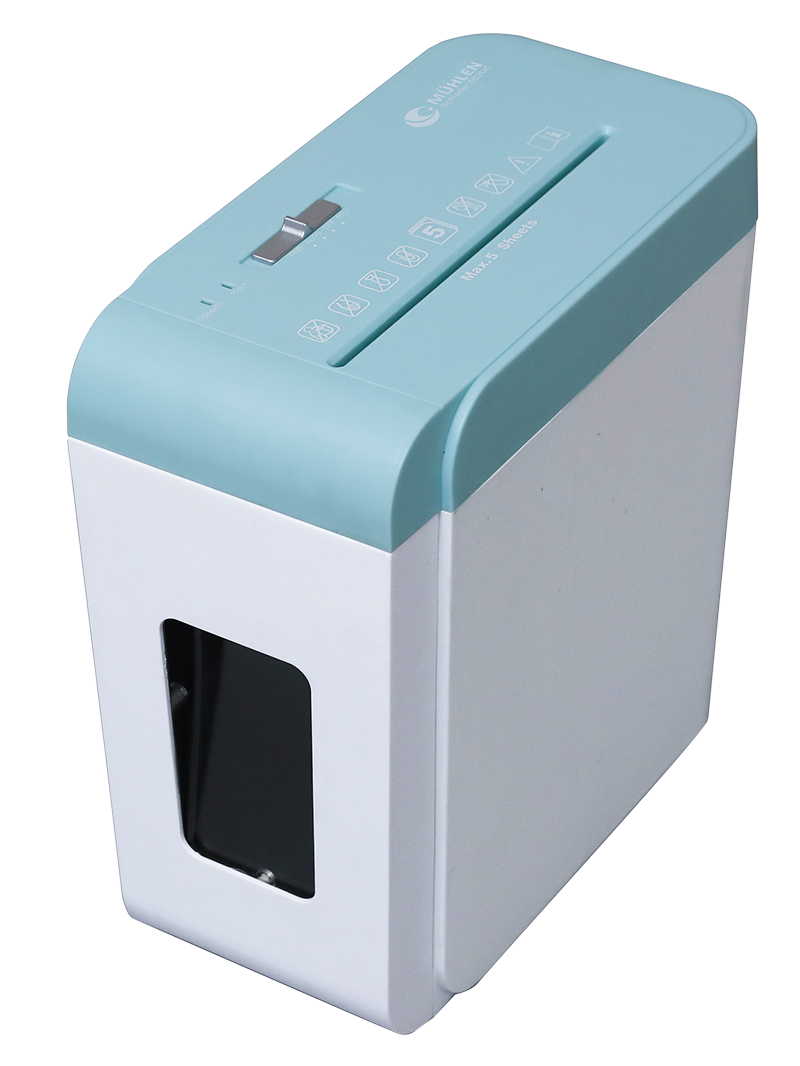 DIN P-4MÜHLEN Eko 502DCPortable Mini Paper ShredderSuper-quiet operation: <53 dBShreds 80 sheets per minute4x35 mm confetti/cross-cutView
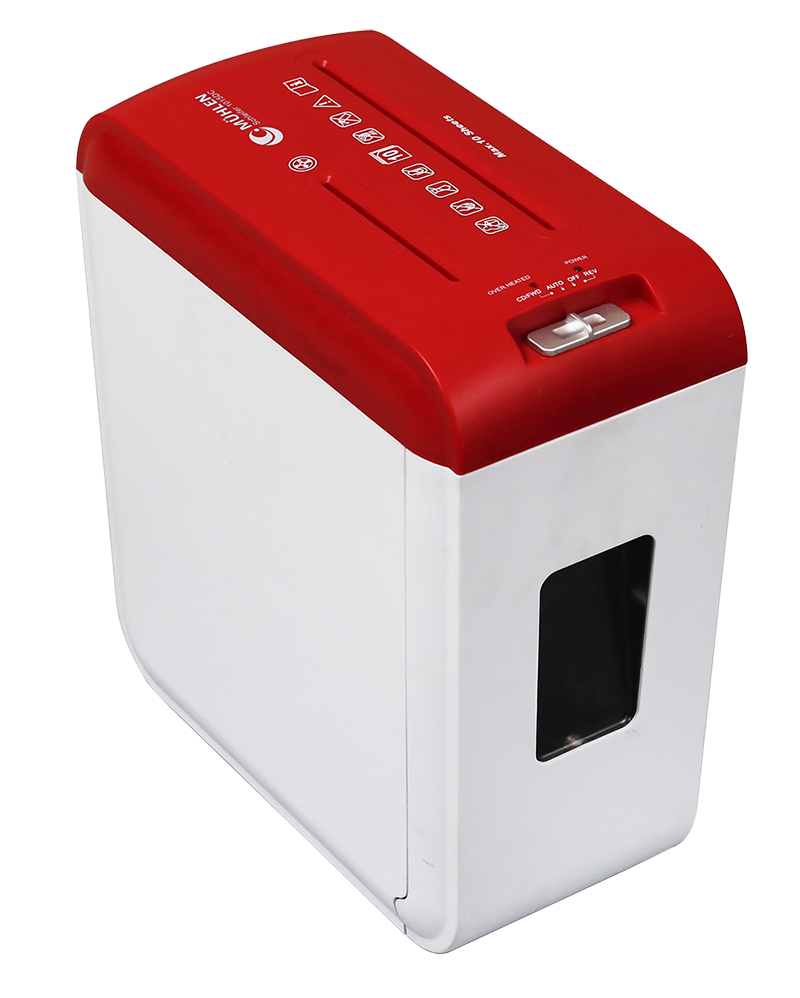 DIN P-4MÜHLEN Eko 15Lt-CCross-Cut Paper ShredderFor medium-duty personal, home and office useConfetti/cross-cut shreddingDual feed slots for paper and CD/DVDView
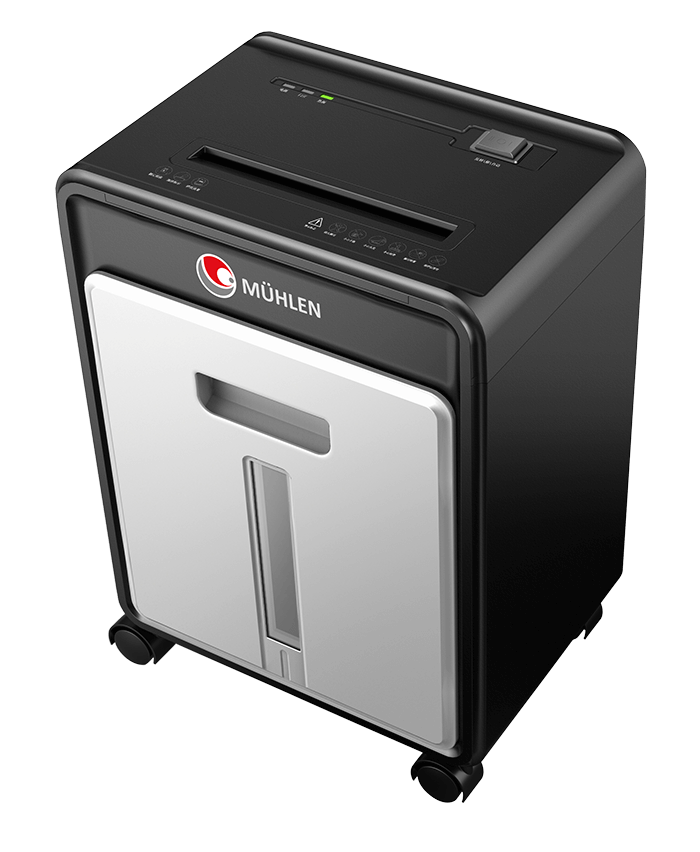 DIN P-4MÜHLEN 20Lt-CCross-Cut Paper ShredderShreds up to 12 sheets at once20~30 minutes of non-stop operationUp to 10 hours of shredding per dayView
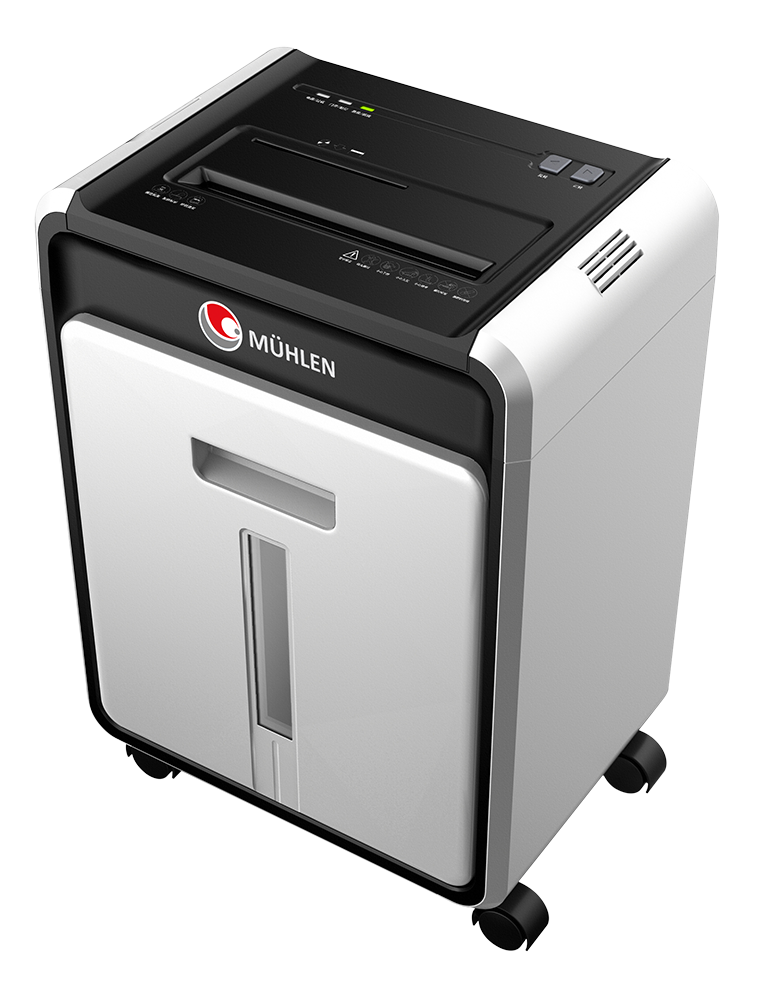 DIN P-4Mühlen 25Lt-MMicro-Cut Paper ShredderMotor stops on body-heat detection for safetyNon-stop running time: 20~30 minutesNon-stop shredding: 3,000 sheetsView
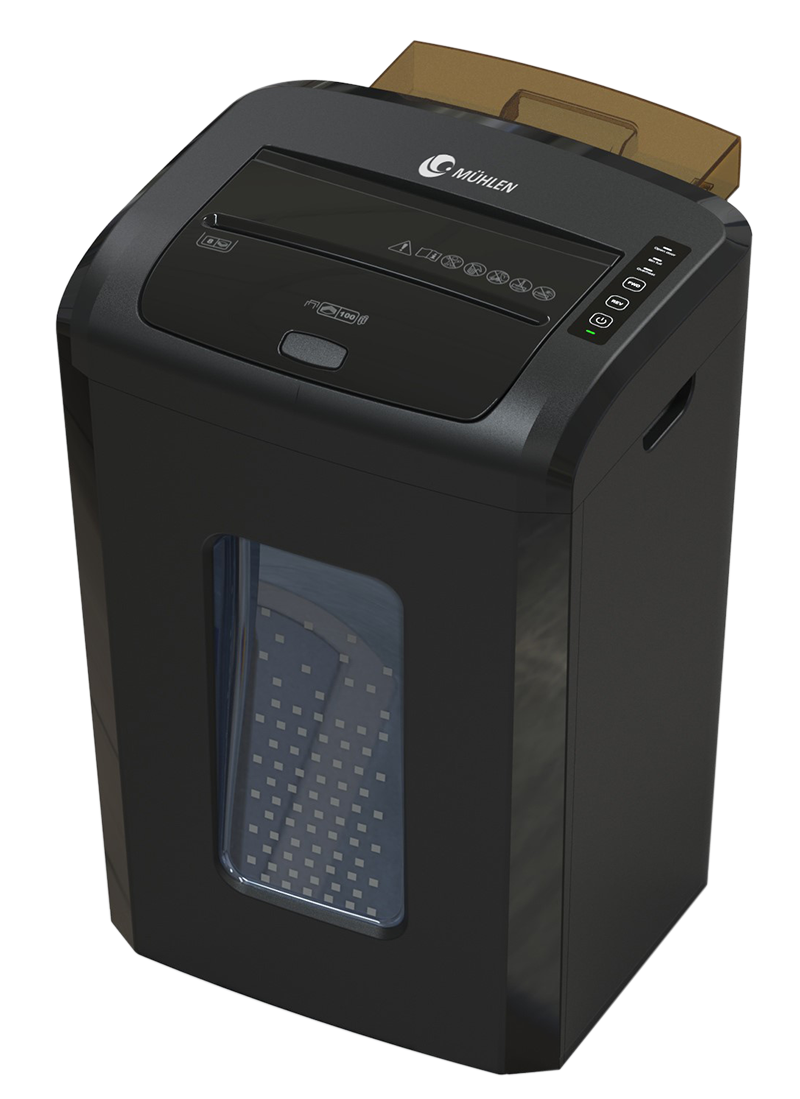 DIN P-4Mühlen VS/100MAAuto-Feed Paper ShredderAuto-feed paper shredderAutomatic, fast shredding system100-sheet automatic feed trayView
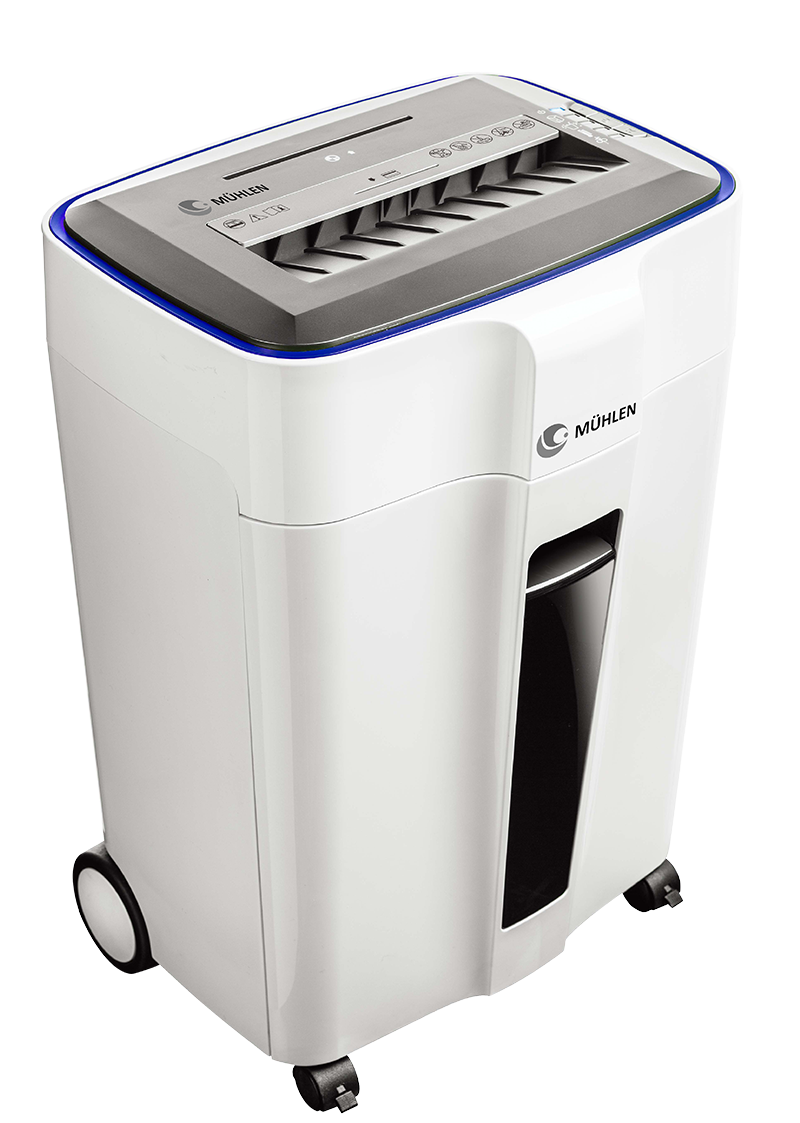 DIN P-4MÜHLEN Ofen 330CPaper Shredder (Cross-Cut)Cross-cut document shreddingNon-stop shredding: >12 minutes16 sheets per passView
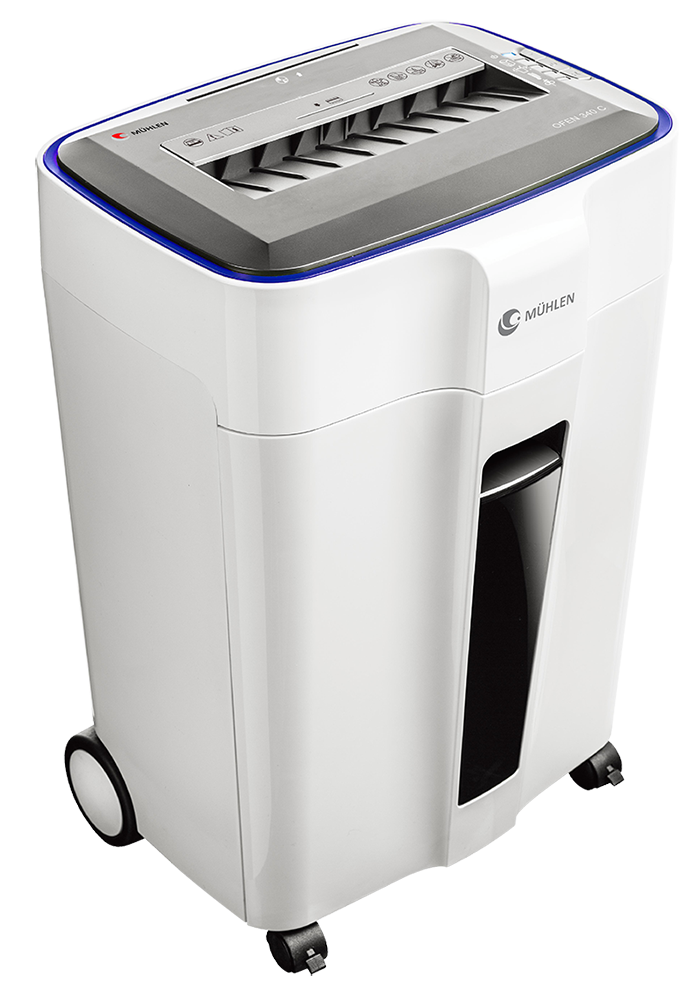 DIN P-4Mühlen Ofen 340CPaper Shredder (Cross-Cut)Cross-cut document shreddingNon-stop shredding: >20 minutes22 sheets per passView
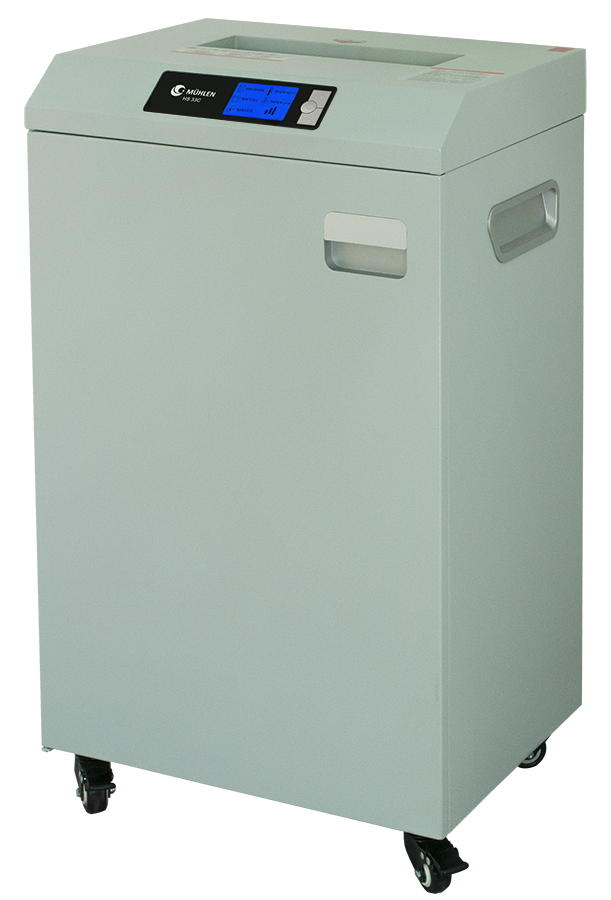 DIN P-4Mühlen Pro 80Lt-CA3 Professional Paper Shredder (HS 33C)Archive and heavy-duty shreddingShreds 30 sheets at onceA3-size 310 mm feed slotView
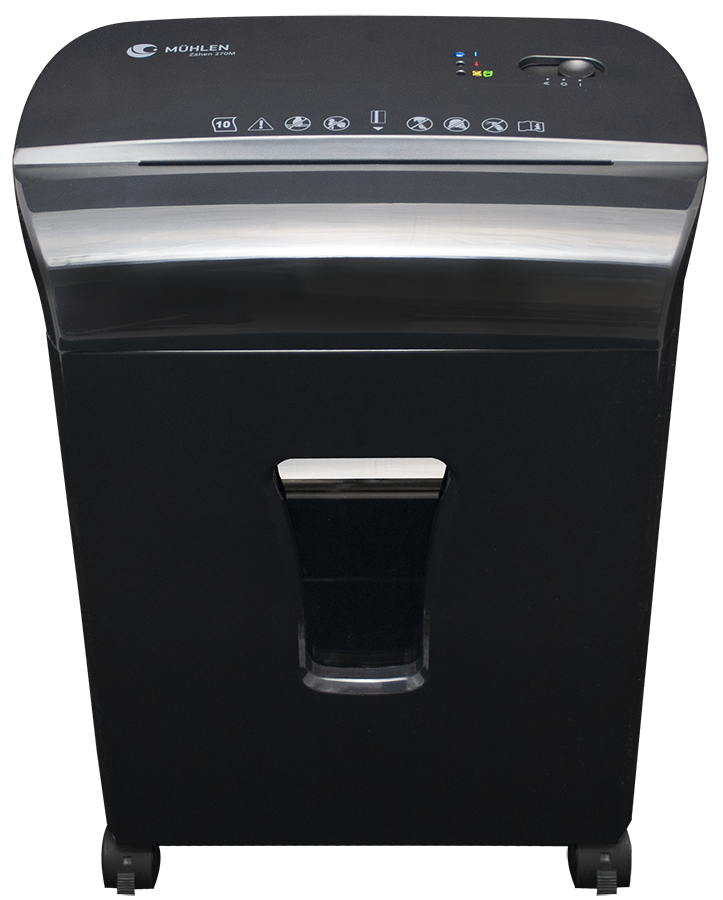 DIN P-4Mühlen Zähen 270MMicro-Cut Paper ShredderPowerful motor and blade systemShreds 10 sheets at onceMicro-cut (5x10 mm)View
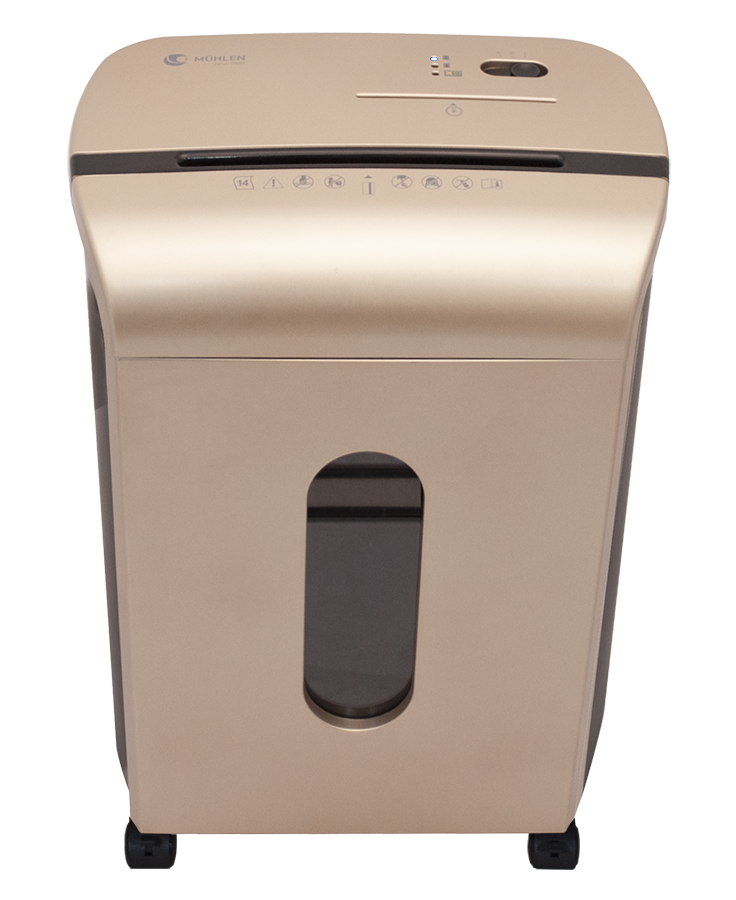 DIN P-4Mühlen Zähen 290MMicro-Cut Paper ShredderMulti-feed slot14 sheets per passMicro-cut, DIN P4View
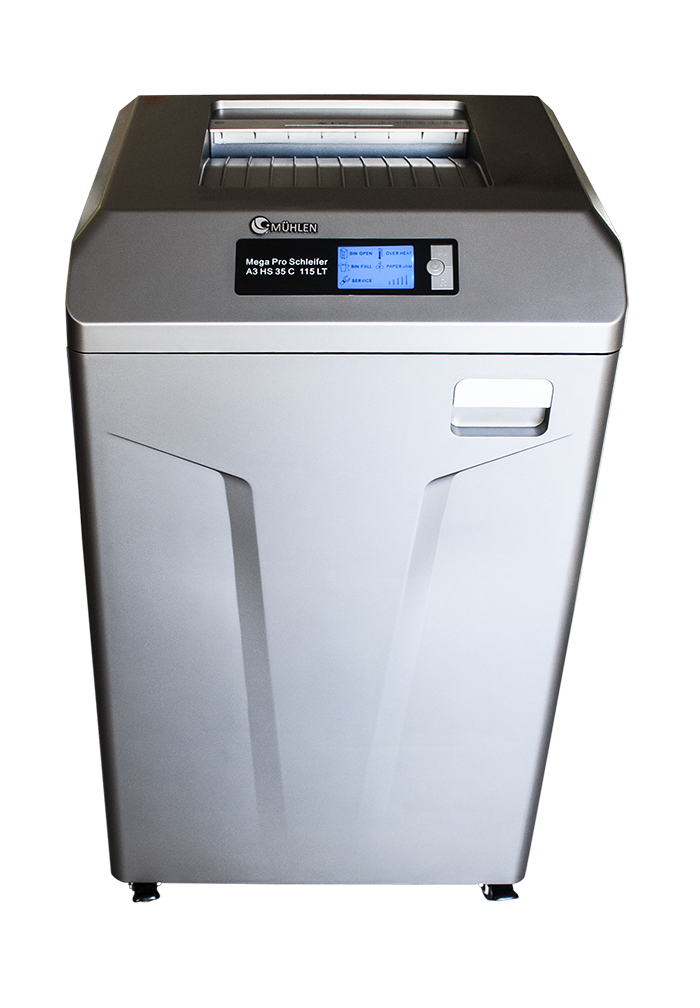 DIN P-4Mühlen Pro 115Lt-CLargest Paper ShredderShreds A3 and smaller documents, CDs and cardsShreds up to 35 sheets at once3x30 mm confetti cut (DIN P4)View
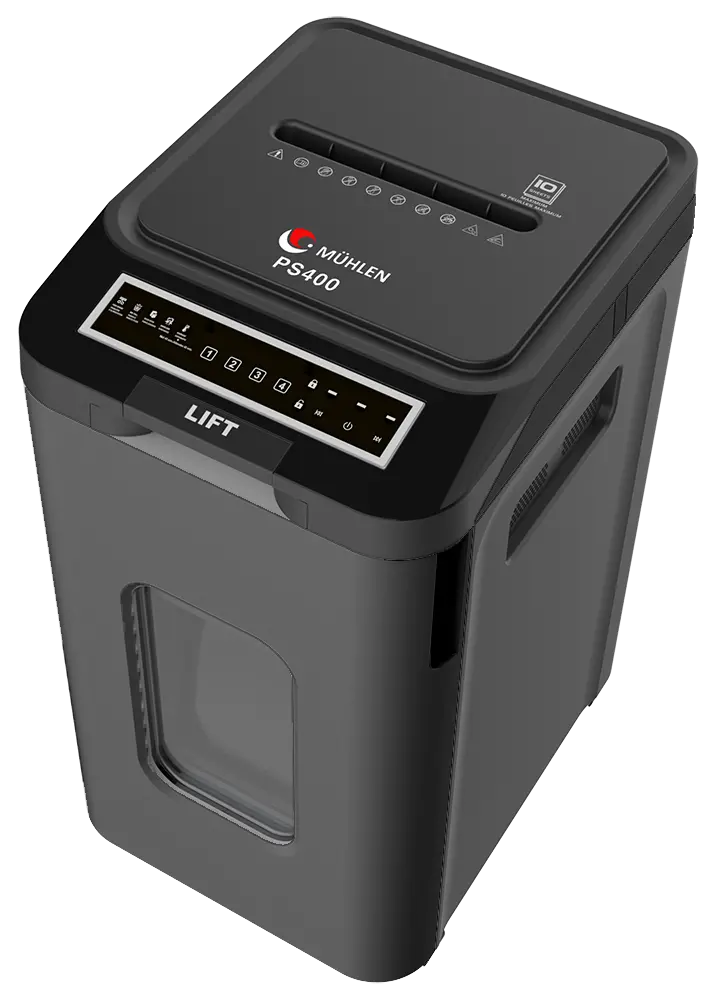 DIN P-5Mühlen PS-400-MMicro-Cut Auto-Feed Paper ShredderAuto-feed paper shredderBin lock prevents unauthorized accessAuto cycle: 240 min on / 45 min offView
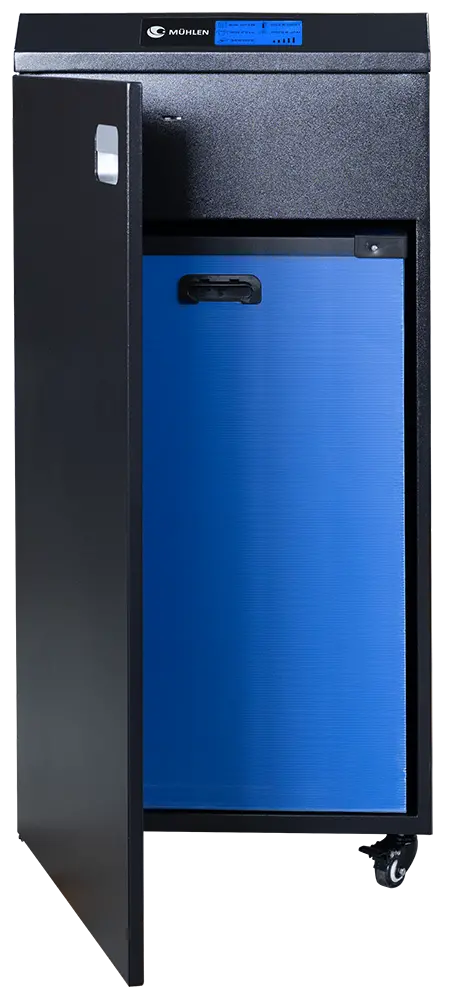 DIN P-5Mühlen Pro 162LT-MMega-Size Micro-Cut Paper Shredder25-sheet capacity per passShreds A3 documents, CDs and cards60 minutes of continuous operationView
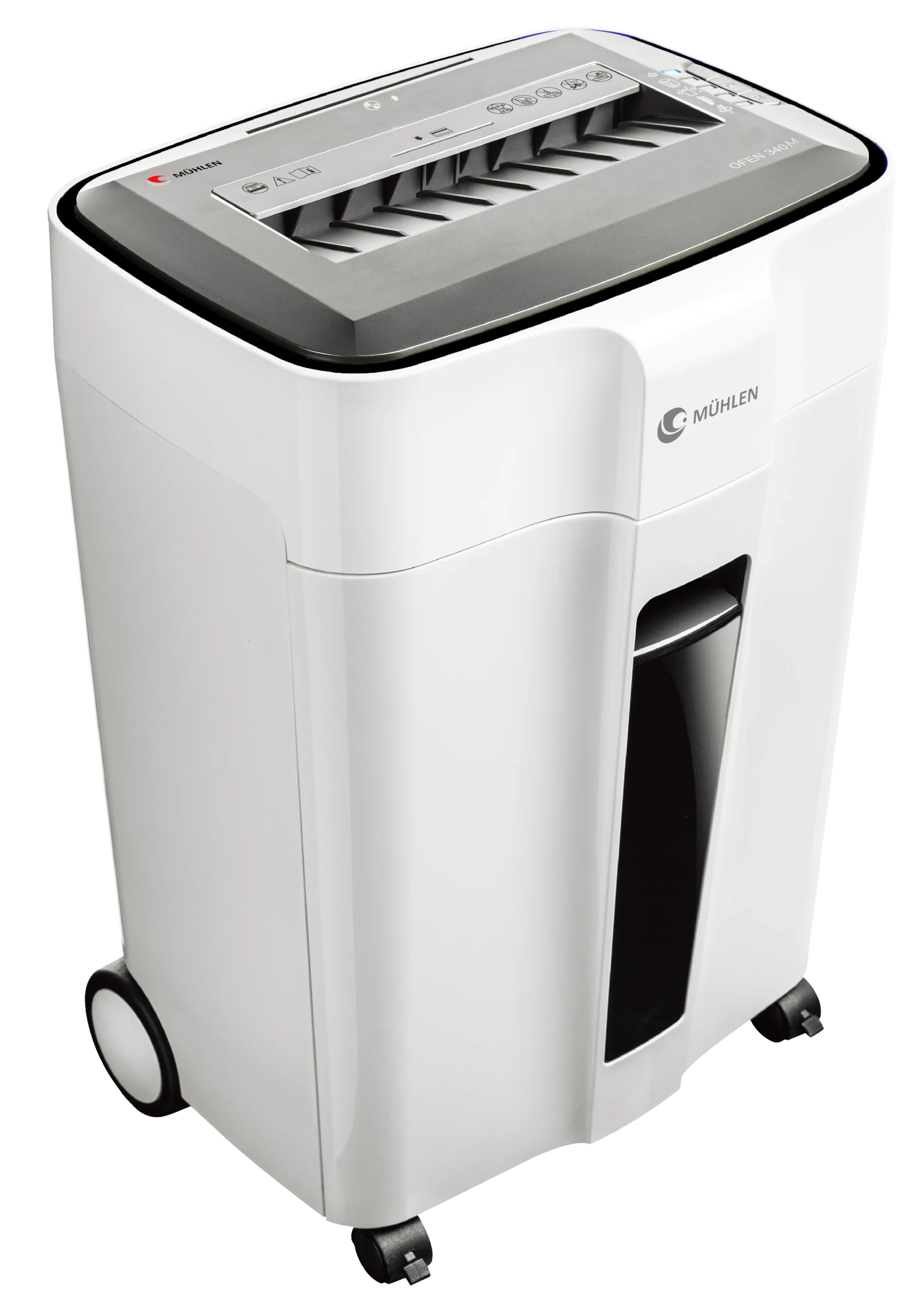 DIN P-5Mühlen Ofen 340MShared Office Paper ShredderUltra micro-cut (2x10 mm) particlesNon-stop shredding: 20 minutesAutomatic control systemView
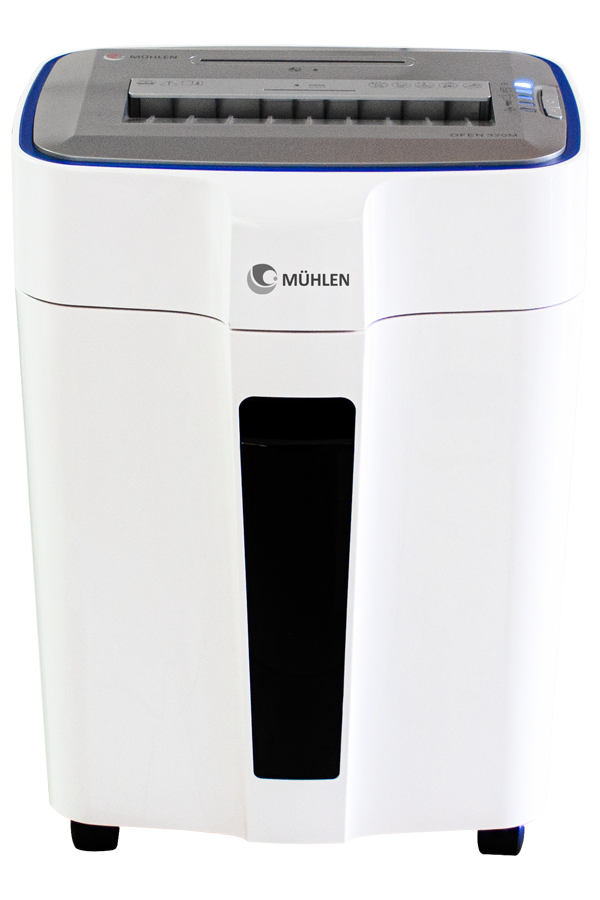 DIN P-5Mühlen Ofen 320MPaper ShredderSuper micro-cut shreddingNon-stop shredding: 10 minutes8 sheets per passView
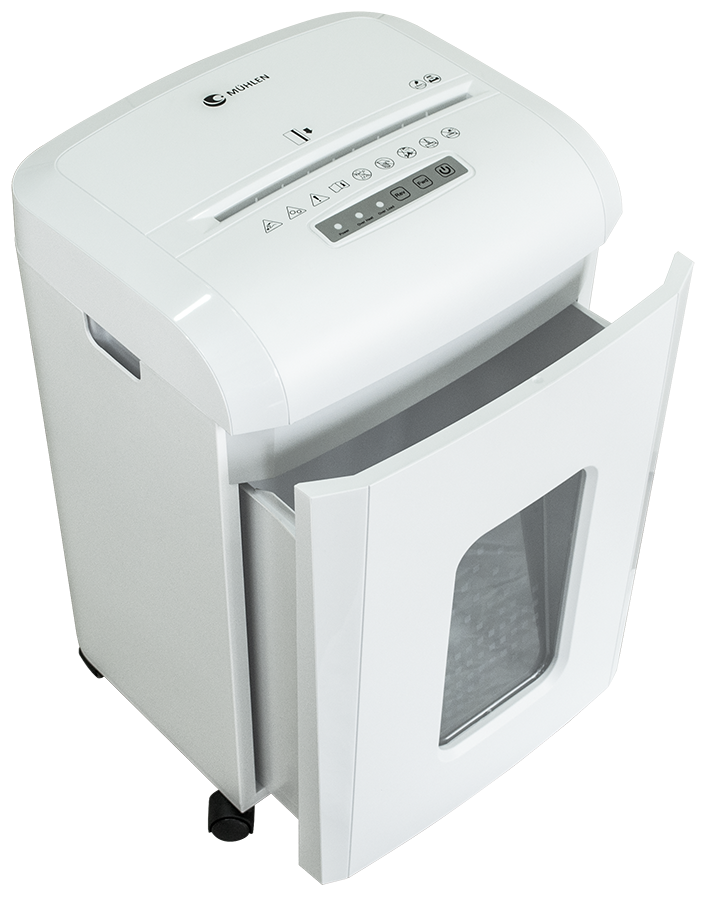 DIN P-5Mühlen VS130AFMicro-Nano Cut Paper ShredderShreds 10 sheets per pass26-liter waste binMicro-nano document shreddingView
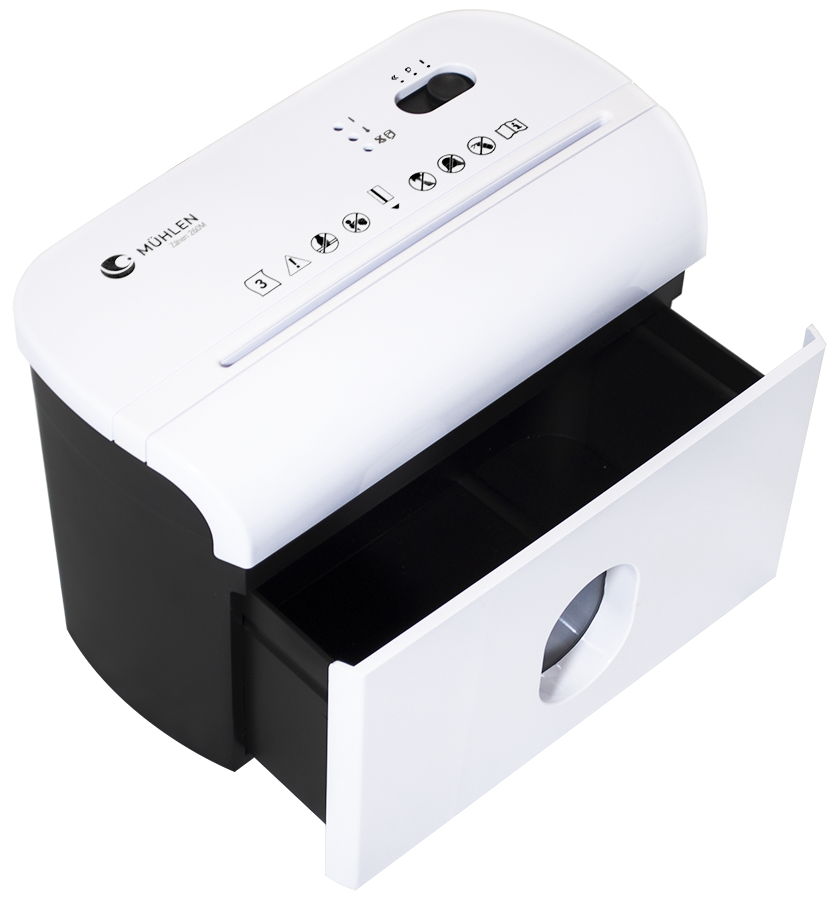 DIN P-5MÜHLEN Zähen 260MMicro-Cut Mini Paper ShredderMini size, stylish design, powerful systemCut type and level: micro-cutNon-stop shredding: 5 minutesView
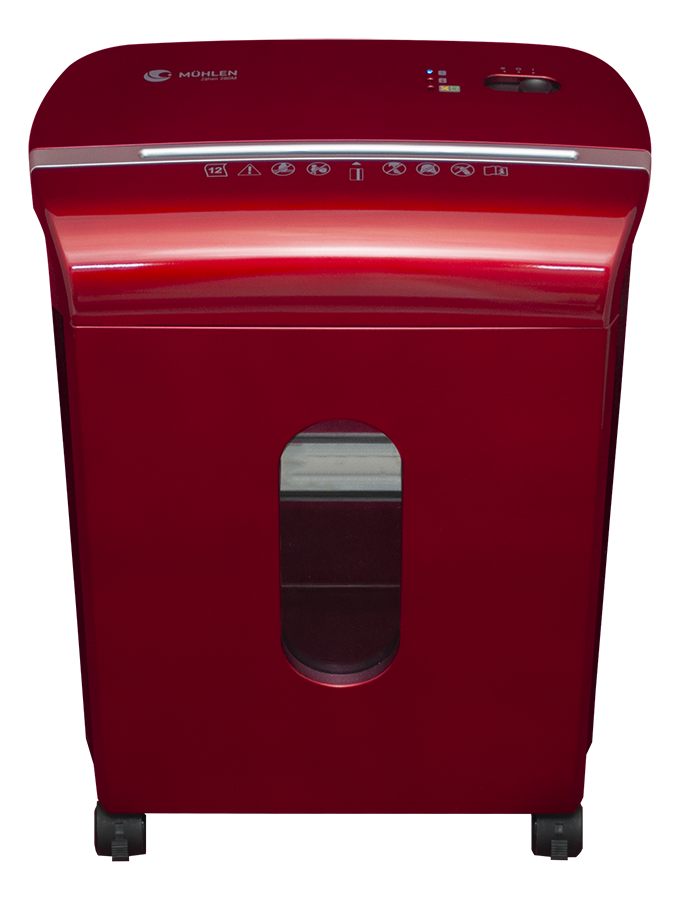 DIN P-5MÜHLEN Zähen 280MMicro-Cut Paper ShredderModern, stylish lookShreds 12 sheets at onceMicro-cut, DIN P5 levelView
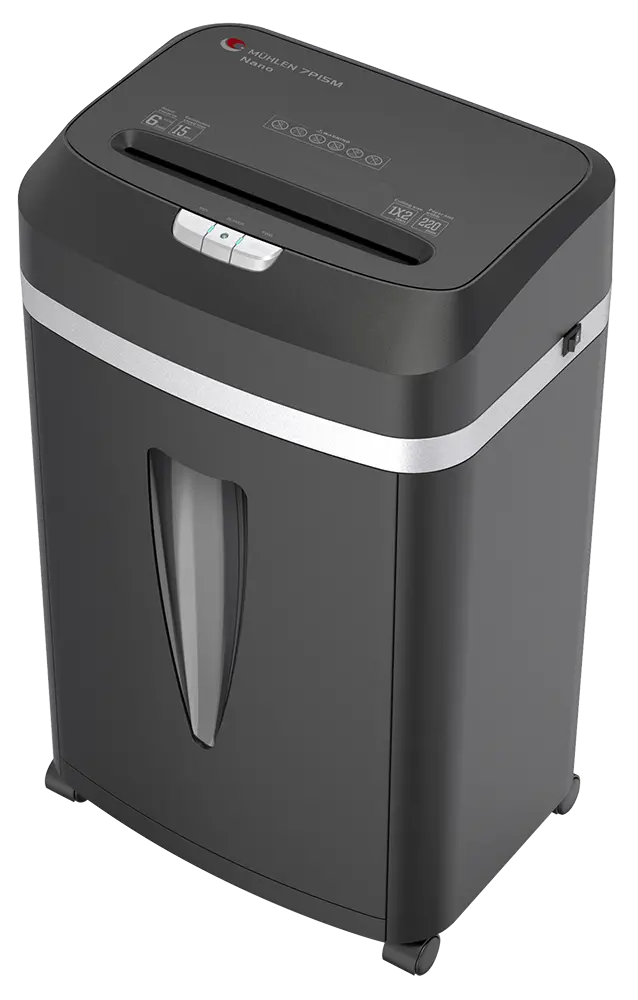 DIN P-7Mühlen 7P15MNano-Cut Paper Shredder, P7Duty cycle: 15 min on / 30 min offAnti-jam: automatic reverseCut type: 1x2 mm micro-cutView
Recommended Mühlen document shredders: 23 models · card details come from the technical data on the product pages.
All document shreddersDIN 66399 paper security levels (P-1 – P-7)
For paper and other information in original size, levels are marked with the letter “P”. The A4 column shows the minimum number of pieces a 210 × 297 mm page is cut into at that level (page area ÷ largest particle area).
| Level | Size limit | Cut type | A4 page | Protection class | Mühlen models |
|---|---|---|---|---|---|
| P-1 | Particle max. 2,000 mm² or strip max. 12 mm | Strip cut | ≥ 32 pieces | 1 | — |
| P-2 | Particle max. 800 mm² or strip max. 6 mm | Strip cut | ≥ 78 pieces | 1 | — |
| P-3 | Particle max. 320 mm² or strip max. 2 mm | Cross (confetti) cut | ≥ 195 pieces | 1, 2 | 1 model |
| P-4 | Particle max. 160 mm², width max. 6 mm; strip cut not allowed | Cross (confetti) cut | ≥ 390 pieces | 2 | 15 models |
| P-5 | Particle max. 30 mm², width max. 2 mm | Cross (confetti) cut | ≥ 2,079 pieces | 2, 3 | 7 models |
| P-6 | Particle max. 10 mm², width max. 1 mm | Micro cut | ≥ 6,237 pieces | 3 | — |
| P-7 | Particle max. 5 mm², width max. 1 mm | Micro cut | ≥ 12,474 pieces | 3 | 1 model |
Protection classes: which document belongs in which class?
DIN 66399 first places a document's protection need in one of three classes, then sets the levels that can be used in that class. The classes overlap at neighbouring levels; for example, P-3 belongs to both class 1 and class 2.
Protection class 1
Normal protection need · internal data
P-1P-2P-3
Example: Notes, drafts, general correspondence.
Our example: Notes, drafts, general correspondence, internal notices.
Protection class 2
High protection need · confidential data
P-3P-4P-5
Example: Information affecting a person, such as account balances, school reports and references.
Our example: Contracts, invoices, payslips, CVs, bank statements, customer forms.
Protection class 3
Very high protection need · strictly confidential and secret data
P-5P-6P-7
Example: Particularly sensitive health data, tax data.
Our example: Medical reports, biometric data, criminal records, trade secrets.
Data carriers other than paper
Besides paper, DIN 66399 defines five more groups of data carriers, each with its own letter and particle sizes. A machine rated P-4 for paper does not automatically reach the same level for CDs or cards.
| Letter | Group | Example carriers |
|---|---|---|
| P | Information in original size | Paper, documents, drawings, printouts |
| F | Information in reduced form | Microfilm, microfiche, film |
| O | Optical data carriers | CD, DVD, Blu-ray |
| T | Magnetic data carriers | Floppy disks, magnetic stripe cards, cassettes, tapes |
| H | Hard drives | Magnetic hard disks |
| E | Electronic data carriers | USB sticks, memory cards, mobile phones |
What does KVKK require for document destruction?
Turkey's Regulation on the Erasure, Destruction or Anonymisation of Personal Data does not prescribe a particular machine or DIN level for paper. The Personal Data Protection Law (KVKK) requires the data controller to take “all necessary technical and administrative measures to ensure an appropriate level of security” (Law No. 6698, Art. 12). A DIN 66399 level makes this measure measurable. The key rules of the Regulation:
- Definition of destruction
- Making personal data “inaccessible, irretrievable and non-reusable by anyone in any way” (Art. 9/1).
- When?
- Once all processing conditions in the Law cease to exist, data is erased, destroyed or anonymised ex officio or at the data subject's request (Art. 7/1).
- Periodic destruction
- A data controller with a retention and destruction policy destroys data at the first periodic destruction; the periodic interval “may in no case exceed six months” (Art. 11/1-2).
- Without a policy
- A data controller not obliged to prepare a policy destroys data within three months after the obligation arises (Art. 11/3).
- Data subject's request
- If all processing conditions have ceased, the request is concluded “within thirty days at the latest” (Art. 12/1-a).
- Records
- All erasure, destruction and anonymisation operations are recorded; records are kept for “at least three years”, other legal obligations excepted (Art. 7/3).
- Policy
- Data controllers required to register with VERBİS (the Data Controllers' Registry) prepare a personal data retention and destruction policy (Art. 5/1).
What are special categories of personal data?
Under Art. 6/1 of Law No. 6698, data on a person's race, ethnic origin, political opinion, philosophical belief, religion, sect or other beliefs, appearance and dress, membership of associations, foundations or trade unions, health, sexual life, criminal convictions and security measures, as well as biometric and genetic data, are special categories of personal data. The selector places these documents in class 3.
What should a destruction record contain? (suggestion)
The Regulation requires operations to be recorded but does not set the format of the record. The following fields make a destruction record explainable in an audit:
- Date of destruction and periodic destruction period
- Document group destroyed and approximate quantity
- Method: machine used and DIN 66399 level (e.g. P-4 cross cut)
- Person who carried out and approved the operation
- Relevant article of the retention and destruction policy
For document destruction under KVKK and model recommendations, see our KVKK-Compliant Document Shredding page; for cut type and capacity selection, see our guide How to Choose a Paper Shredder.
This section is not legal advice; the articles are summarised from the official texts on mevzuat.gov.tr.
Frequently asked questions
What is DIN 66399?
DIN 66399 is the German standard for the destruction of data carriers. For paper it measures security in seven levels, P-1 to P-7, based on particle size, and groups these levels into three protection classes. It uses separate letters (O, T, H, E, F) for carriers such as CDs, cards, hard drives and USB sticks.
What is the difference between P-4 and P-5?
At P-4 a particle is at most 160 mm² and at most 6 mm wide; an A4 page is cut into at least 390 pieces. At P-5 a particle is at most 30 mm² and at most 2 mm wide; the same page is cut into at least 2,079 pieces. P-5 particles are about five times smaller.
Which DIN level is required for personal data?
KVKK does not prescribe a specific level; it requires an appropriate level of security. Documents containing personal data fall into protection class 2 under DIN 66399 (P-3 – P-5); the manufacturer recommendation is cross-cut P-4 or higher. For special categories such as health data, class 3 (P-5 – P-7) is chosen.
Is a strip-cut shredder enough for personal data?
Strip cut is at levels P-1 and P-2 under DIN 66399 and falls into protection class 1. Because the strips remain as long as the page, cross cut (P-4, P-5) or micro cut (P-6, P-7) is preferred for documents containing personal data.
How often must documents be destroyed under KVKK?
A data controller with a retention and destruction policy destroys data at the periodic interval set in the policy; this interval may not exceed six months. Those not obliged to have a policy destroy data within three months of the obligation arising (Regulation Art. 11).
Sources
- Regulation on the Erasure, Destruction or Anonymisation of Personal Data (official Turkish text, mevzuat.gov.tr)
- Law No. 6698 on the Protection of Personal Data (official Turkish text, mevzuat.gov.tr)
- HSM — Shredder protection classes & security levels (DIN 66399, German)
- Wikipedia (DE) — Aktenvernichter: security levels under DIN 66399
This guide was prepared by Mühlen Türkiye with AI assistance based on the sources above, and every fact was checked against its source. The model list is generated automatically from each product's registered DIN level and usage class. Updated: November 2026.