
How to Spot Counterfeit Turkish Lira
Try the 12 security features of Turkish lira banknotes on an illustrative drawing: hold it to the light, tilt it, feel it and look at it under UV light.
Counterfeit money is detected by holding the banknote to the light, tilting it, feeling it and examining it under ultraviolet (UV) light. On a genuine note, the watermark and a continuous security thread appear when held to the light, the holographic foil changes colour with the angle and the raised print can be felt by hand. Under UV light the paper does not glow; only the fibres glow blue and red. If even one of these features does not match, the banknote is suspicious.
Check the banknote yourself
Choose a method and use the slider to change the light, the angle or the magnifier. The “Counterfeit example” button shows, on the same drawing, the differences the Central Bank of the Republic of Türkiye (CBRT) describes for counterfeit notes.
The drawing is illustrative; it is not a copy of a real banknote. The positions and colours of the elements follow the CBRT's description of the 20 TL (E9 series).
Hold the note up to a light source: elements inside the paper appear.
Watermark
Front · Hold it to the light; look at the unprinted white area.
On a genuine note
In the unprinted white area, a watermark made of a small portrait of Atatürk and the number showing the denomination is visible from both sides when held to the light.
On a counterfeit
Some counterfeits have no watermark at all; on others it is imitated by printing on the inside or outside of the paper.
The 12 security features of Turkish lira banknotes
The table below combines the 12 security features on the CBRT's 20 TL (E9 series) page with the counterfeit differences on its “Characteristics of Counterfeit Turkish Lira Banknotes” page. Colours may vary by denomination.
| Feature | How to check | On a genuine note | On a counterfeit |
|---|---|---|---|
| Watermark | Hold it to the light; look at the unprinted white area. | In the unprinted white area, a watermark made of a small portrait of Atatürk and the number showing the denomination is visible from both sides when held to the light. | Some counterfeits have no watermark at all; on others it is imitated by printing on the inside or outside of the paper. |
| Security thread | Hold it to the light; check whether the thread is continuous. | It is embedded in the paper. Held to the light, it appears as a continuous straight line from both sides and carries the denomination and the letters “TL”. | Counterfeiters try to imitate the security thread by printing. |
| See-through register | Hold it to the light; look at the shapes on the upper left edge. | Held to the light, the shapes on the upper left edge combine with the shapes on the back to form the denomination. | On counterfeit notes the combined image is usually broken and irregular. |
| Holographic stripe foil | Tilt the note to different angles; watch the foil on the right. | Viewed from different angles, the motifs give colourful, shiny reflections; the letters “TL” inside the rectangle turn into the denomination. | Counterfeit foils have been found to use silver-coloured, iridescent glitter. |
| Latent image | Hold the note horizontally at eye level; look at the heptagon at the lower right of the portrait. | Viewed horizontally at eye level, the denomination can be read inside the heptagon at the lower right corner of the portrait. | Counterfeits cannot reproduce this latent image effect as on the genuine note. |
| Colour-changing strip | Tilt the back; watch the printed strip carrying the denomination. | On the back, the printed strip made of the denomination and the letters “TL” turns golden yellow when viewed from different angles. | On counterfeit notes, attempts are made to imitate this print to look like the original. |
| Raised print | Run your finger over the text and numbers on the front. | On the front, some text and number groups and motifs have raised print that can be felt with the finger. | Counterfeits have no raised print; on some, methods that give a feeling of height are tried. |
| Feature for the visually impaired | Touch the upper left edge of the watermark. | On the upper left edge of the watermark there are tactile dots based on the Braille alphabet. | — |
| Microprint | Look at the star-and-crescent motif with a magnifier. | Inside the star-and-crescent motif the denomination and “TL” are printed in microtext and can be read with a magnifier; “TCMB” is also microprinted on the upper and lower edges of the rectangle on the holographic foil. | Under a magnifier the text is distorted and cannot be read; on some counterfeit versions legibility has improved. |
| Ultraviolet (UV) features | Look at the front and back under ultraviolet light in the dark. | A genuine note shows five separate reactions under UV light: The banknote paper (100% cotton fibre) does not glow under UV light. Fibres that are normally invisible glow blue and red. The security thread glows blue, red or yellow depending on the denomination (red on the 20 TL). The denomination and the letters “TL” appear and glow on the portrait of Atatürk (red on the 20 TL). On the back, the red serial number glows bright red and the black one glows yellowish green. | Counterfeit paper glows under UV light even if coated with lacquer; fibres are imitated by printing or with a fluorescent pen; the black serial number does not glow green. |
| Size difference | Place it on top of a note of the same denomination. | Denominations differ by 6 mm on the long side and by 4 mm on the short side in pairs. Example: the 20 TL (E9 series) measures 68 x 142 mm. | Some counterfeits have shown differences of a few millimetres in width and length. |
| Tinted banknote paper | Look at the background colour of the paper in daylight. | The paper colour is a light shade of each denomination's dominant colour. | — |
What to do if you receive a counterfeit note
- Do not spend the note again. Under Article 197/3 of the Turkish Criminal Code, a person who unknowingly accepted counterfeit money and then knowingly puts it into circulation faces imprisonment of three months to one year.
- Do not accept money you know is counterfeit: under Article 197/2 of the Turkish Criminal Code, knowingly accepting counterfeit money is punishable by one to three years' imprisonment and a judicial fine.
- Report it to the police or gendarmerie. Failing to report an ongoing crime to the authorities is a separate offence under Article 278 of the Turkish Criminal Code.
- Do not throw away, tear or alter the note; destroying, concealing or altering evidence of a crime is covered by Article 281 of the Turkish Criminal Code.
This section is not legal advice; the article summaries are taken from the CBRT's “Legal Dimension of Counterfeiting” page.
Which device performs which check?
Checking by hand takes minutes per banknote. Businesses that receive many notes a day leave these checks to devices: UV devices make the ultraviolet reactions visible, and automatic counterfeit detectors scan the note at several points and show the result on the display.
If you want checking during counting, use money counting machines with counterfeit detectors; what UV, MG and IR detectors do is explained in Do Money Counters Detect Counterfeits?.
| Method | CBRT features it makes visible | Mühlen models |
|---|---|---|
| UV counterfeit detector | Non-glowing paper under UV, fibres, security thread, denomination on the portrait, serial numbers | Violet, Violet X, Violet Smart, Violet Sweet |
| Automatic counterfeit detector (Turkish lira) | The machine scans the note and shows the result on the display or with an audible alert | Pointer 2, Atomich 670 |
| Automatic counterfeit detector (8 currencies) | Scans foreign currency notes as well as Turkish lira | Pointer 5, Zoom 6 |
Counterfeit money detectors
Card details come from the technical data on the product pages.
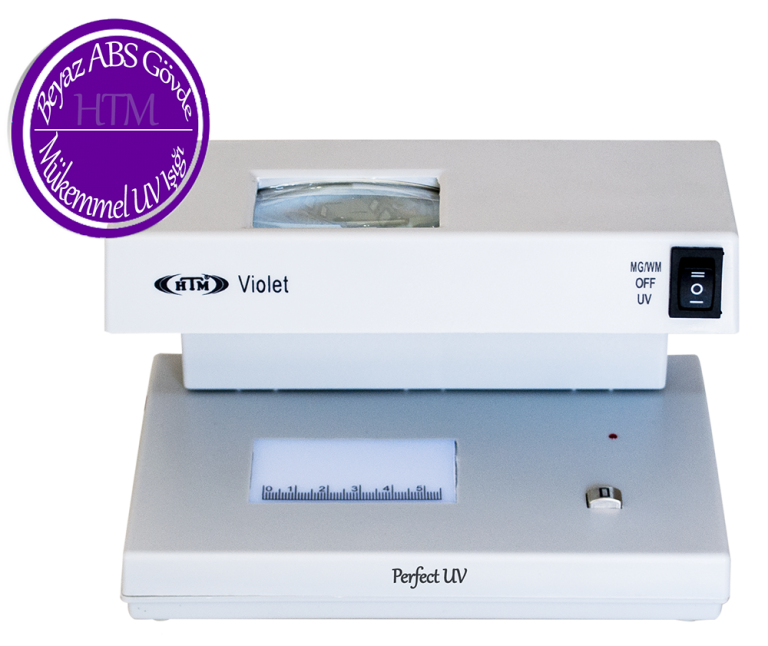 MÜHLEN VioletCounterfeit Money Checking DeviceChecks money, IDs, credit cards, passports...Dual-row, long-life UV fluorescent tubesLong-life WM light for daylight checksView
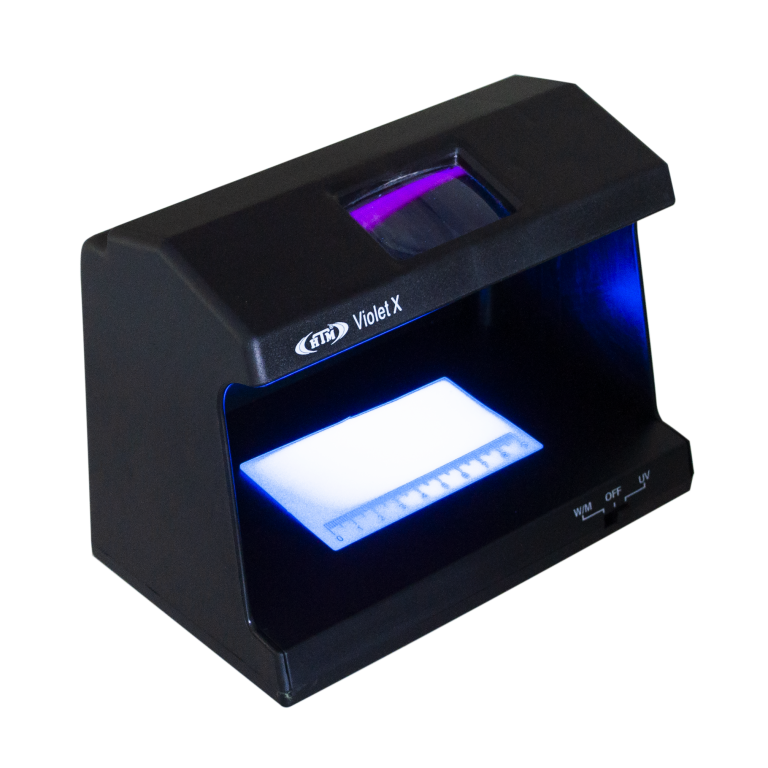 MÜHLEN Violet XMoney Checking DeviceEnhanced ultraviolet systemWorks even in daylightEnclosed black housingView
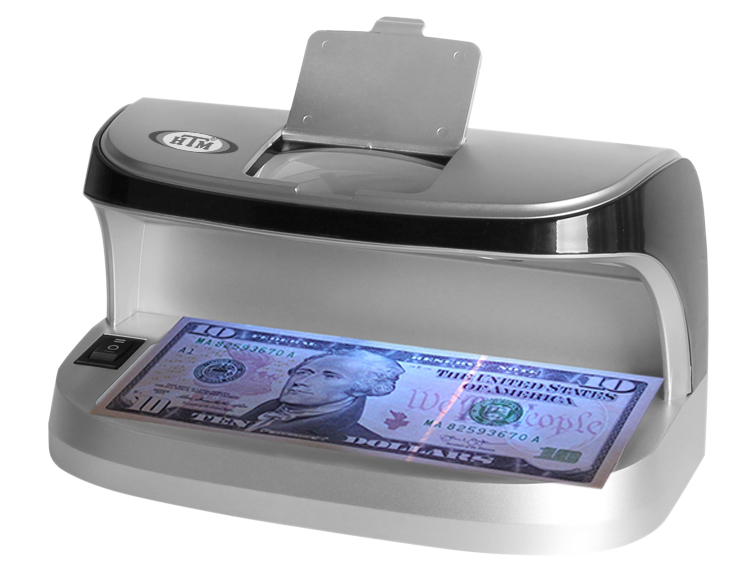 Mühlen Violet SmartMulti-Function Battery-Powered UV Counterfeit DetectorMulti-function banknote checkingBuilt-in 2200 mAh rechargeable Li-ion batteryPowerful, long-life LED UV lightView
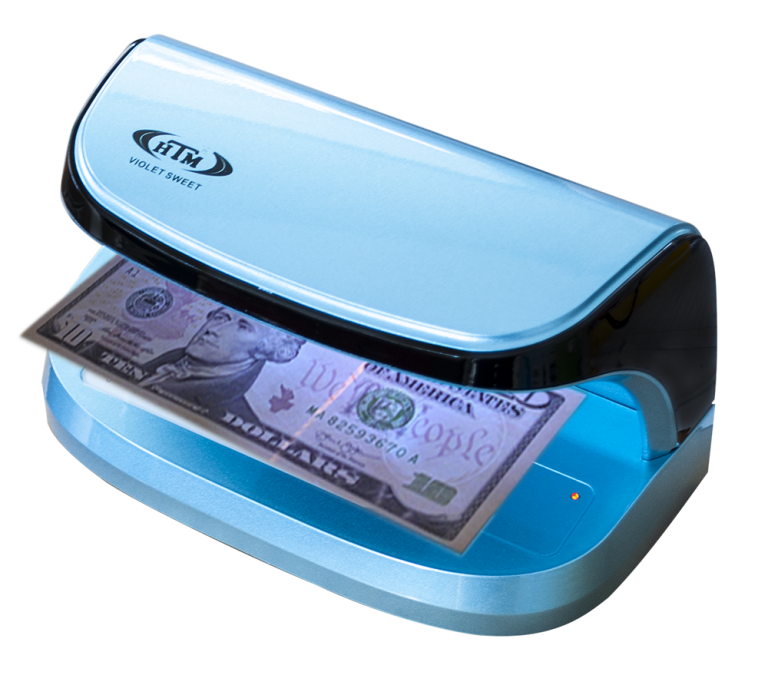 Mühlen Violet SweetMulti-Function Battery-Powered UV Counterfeit DetectorMulti-function banknote checkingBuilt-in 2200 mAh rechargeable Li-ion batteryPowerful, long-life LED UV lightView
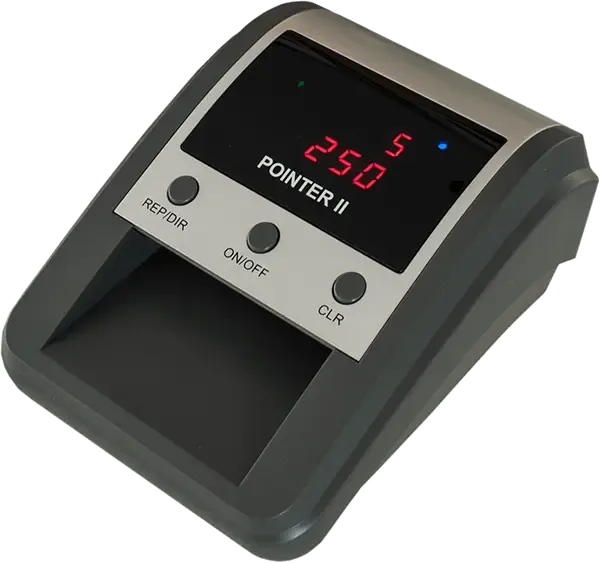 Mühlen Pointer 2Counterfeit Money DetectorAutomatic banknote checker for Turkish LiraDetects counterfeits with 100% accuracyDisplays the value of genuine notesView
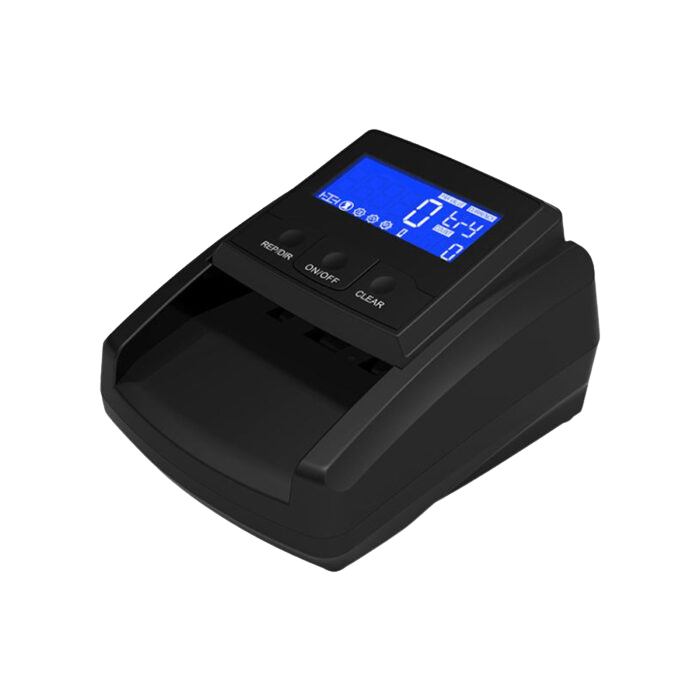 MÜHLEN Atomich (670)Counterfeit Money Detector (for TL)100% counterfeit detectionEconomical detectorAudible and on-screen warningsView
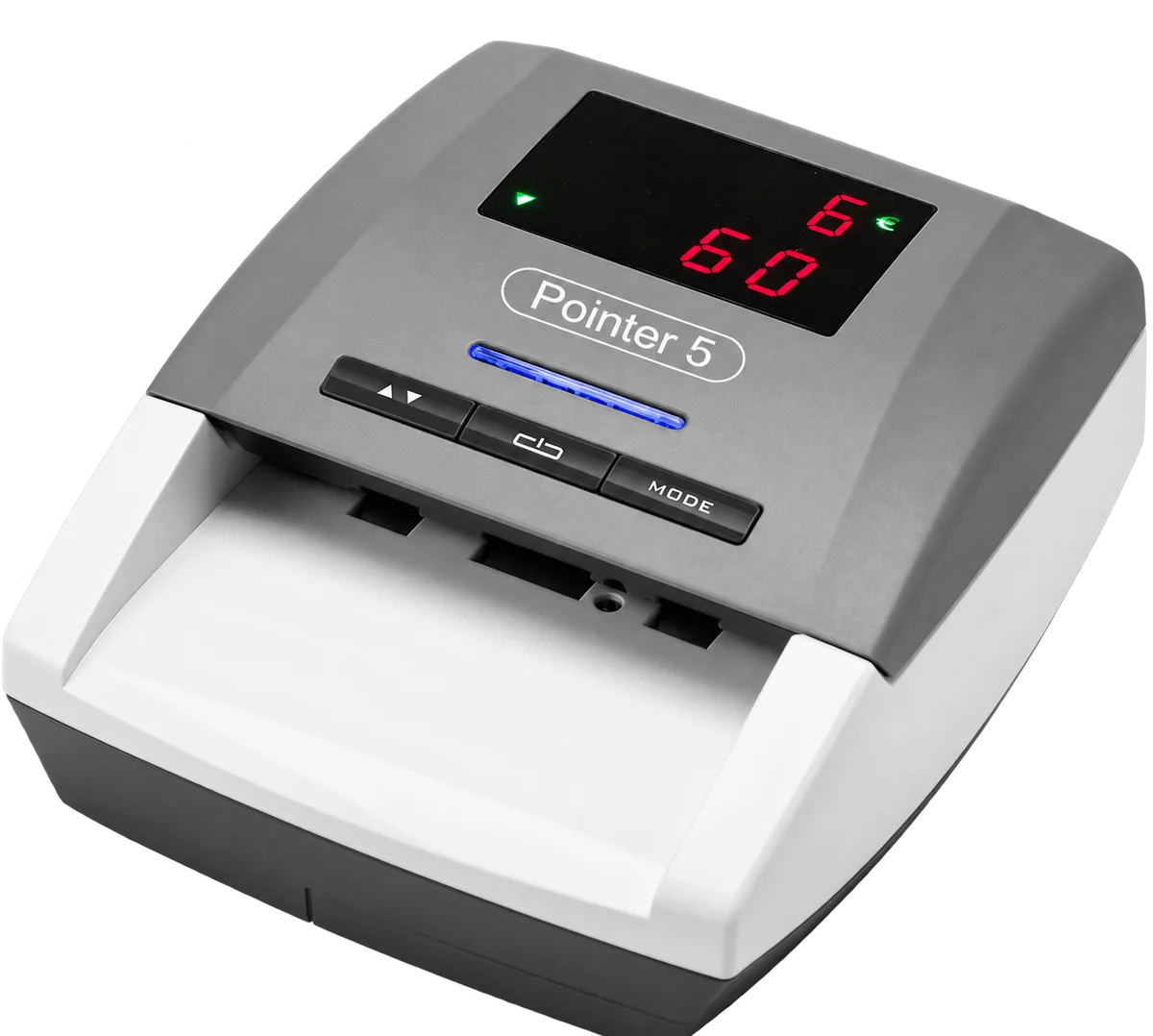 Mühlen Pointer 58-Currency Counterfeit Money DetectorChecks 8 currencies without changing menusTL, EUR, GBP, CHF, SEK, NOK, CZK, DKK7-layer, 45-point detection systemView
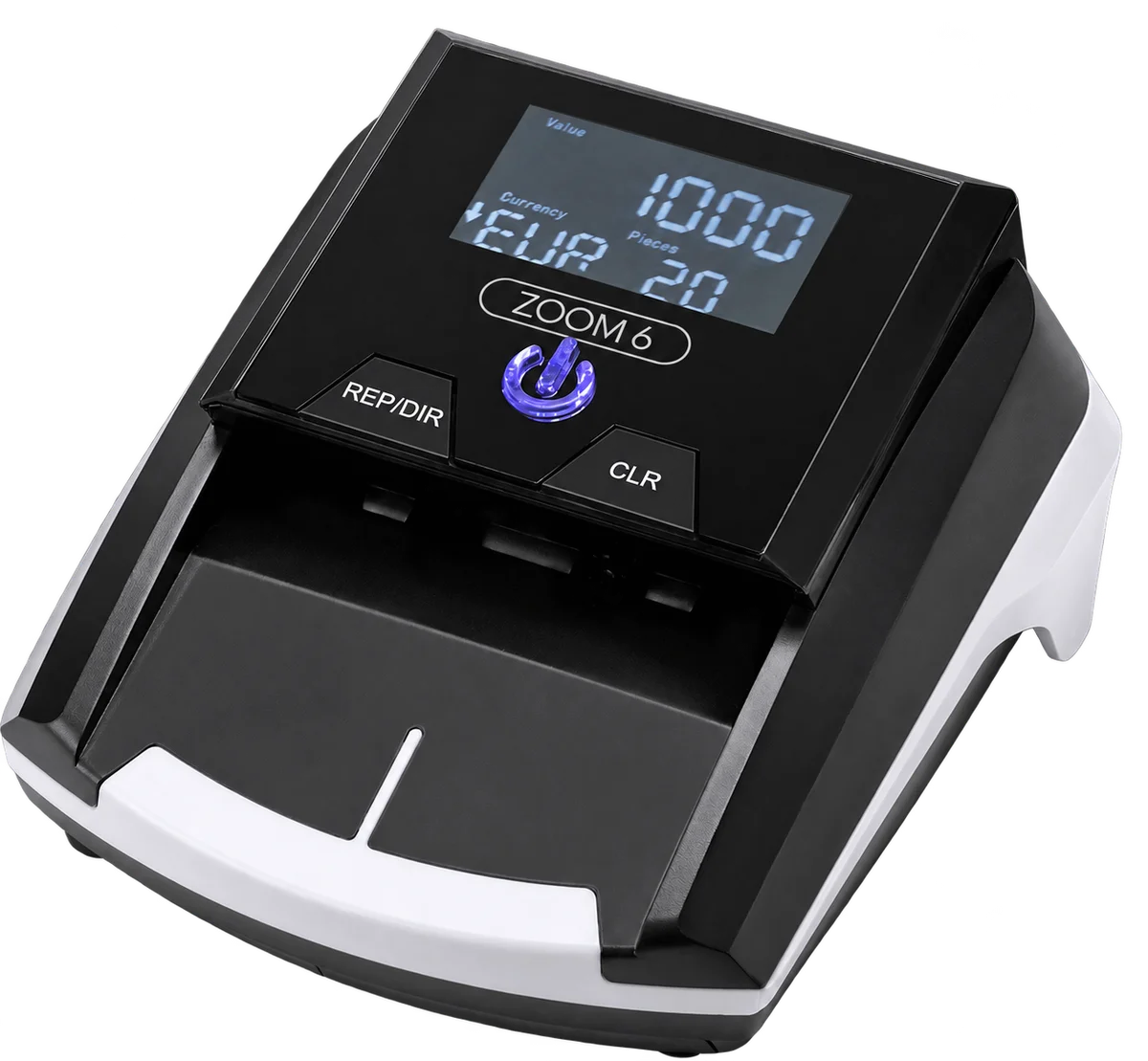 Mühlen Zoom 6Automatic 8-Currency Counterfeit Money DetectorAutomatically recognises 8 currenciesTL, USD, EUR, SAR, AED, SYP, GBP, CHF7-layer, 61-point counterfeit detectionView
Frequently asked questions
How can you tell if money is counterfeit?
Hold the note to the light (watermark, continuous security thread, see-through register), tilt it (holographic foil, latent image, colour-changing strip), feel it (raised print) and look at it under UV light (the paper should not glow; the fibres should glow blue and red). If even one feature does not match, the note is suspicious.
What does counterfeit money look like under UV light?
According to the CBRT, counterfeit banknote paper glows under UV light; genuine banknote paper does not. On a genuine note only the fibres glow blue and red and the security thread glows blue, red or yellow depending on the denomination; on counterfeits the black serial number does not glow green.
Where is the watermark on a banknote?
The watermark is in the unprinted white area: it consists of a small portrait of Atatürk and the number showing the denomination, and it is visible from both sides when the note is held to the light. A watermark visible without holding it to the light may have been imitated by printing.
What should you do if you receive a counterfeit note?
Do not spend the note again and report it to the police or gendarmerie. Under Article 197/3 of the Turkish Criminal Code, a person who unknowingly received counterfeit money and puts it into circulation after finding out faces imprisonment of three months to one year.
Can a money counting machine detect counterfeit money?
Money counting machines with counterfeit detectors separate suspicious notes using methods such as UV, MG and IR. Which detector each model has is stated on its product page.
Sources
- CBRT — Characteristics of Counterfeit Turkish Lira Banknotes (Turkish)
- CBRT — 20 Turkish Lira (E9 series) security features (Turkish)
- CBRT — Legal Dimension of Counterfeiting (Turkish)
This guide was prepared by Mühlen Türkiye with AI assistance based on the CBRT pages above, and every fact was checked against its source. The banknote drawing is illustrative; it is not a copy of a real banknote. Updated: November 2026.