
Laminating Machines in Izmir
Laminating Machines in Izmir
A laminating machine seals printed documents between clear film using heat and pressure, protecting them against tearing, moisture, stains and fading. Mühlen laminating machines are shipped throughout Turkey, including Izmir; there is no difference in ordering by city.
Izmir is a busy commercial hub for printing and print services, education, tourism and hospitality, and exporting manufacturers. Each of these businesses has different laminating needs: a school laminates a few ID cards a day, while a print shop laminates A3 prints non-stop all day. This page is designed to help you tell which machine suits which use.
For all models and technical specifications, browse the laminating machines category.
Highlights
- Maximum paper size
- Number of rollers
- Warm-up time
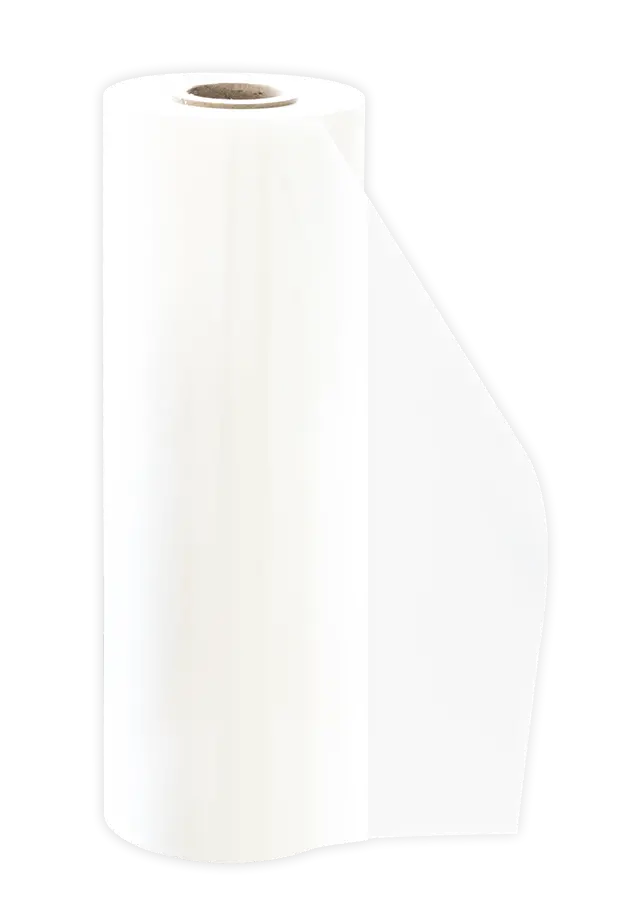
- Supported film thickness
- Cold lamination support
Would you like help choosing a model?
Tell us what you will laminate and roughly how many items a day, and we will shortlist suitable models.
01
Which Model Should Each Business in Izmir Choose?
The most practical way to choose the right machine is to start from your daily laminating volume and maximum paper size.
Print shops, digital printing and stationers
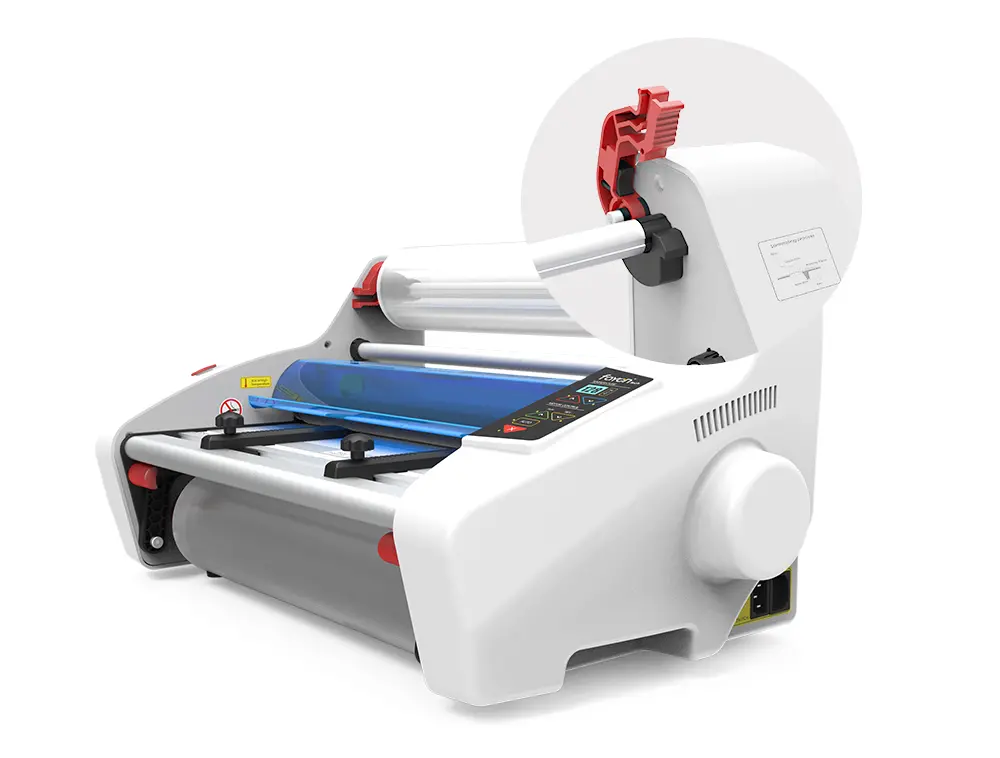
These businesses run continuously all day and laminate A3 and larger formats. What matters here are warm-up time, the number of rollers and laminating speed per minute. Professional models with four or more rollers keep the temperature more stable during long, uninterrupted use and reduce the risk of creasing. If you also offer print film lamination in addition to printing, choose models that support thicker film options.
Schools, tutoring centres and educational institutions
The main needs are laminating ID cards, student certificates, display board visuals and notices. Usage is regular but light. Fast-heating desktop models with A4 and A3 support are sufficient for this use. Models that work with different film thicknesses allow both thin documents and thick card to be laminated.
Hotels, restaurants and tourism businesses
Used for laminating menus, price lists, room information cards and signs. Because these documents are handled often and stay in humid environments, laminating with thick film becomes important. The film thickness preferred for menus is higher than for standard documents; check in the technical table on the product page that the machine supports this thickness.
Manufacturing, export and logistics companies
Used for laminating product labels, shipping documents, quality cards and instruction labels on machines. In warehouses and production areas documents are exposed to dust, oil and moisture, so lamination keeps them legible. In this use, durability and availability of consumables matter more than speed.
Offices, accounting and freelance professionals
Compact A4 models are enough for occasional use. Typical use is protecting licences, certificates, diplomas and frequently used reference documents.
02
Five Criteria for Choosing a Laminating Machine
Maximum paper size
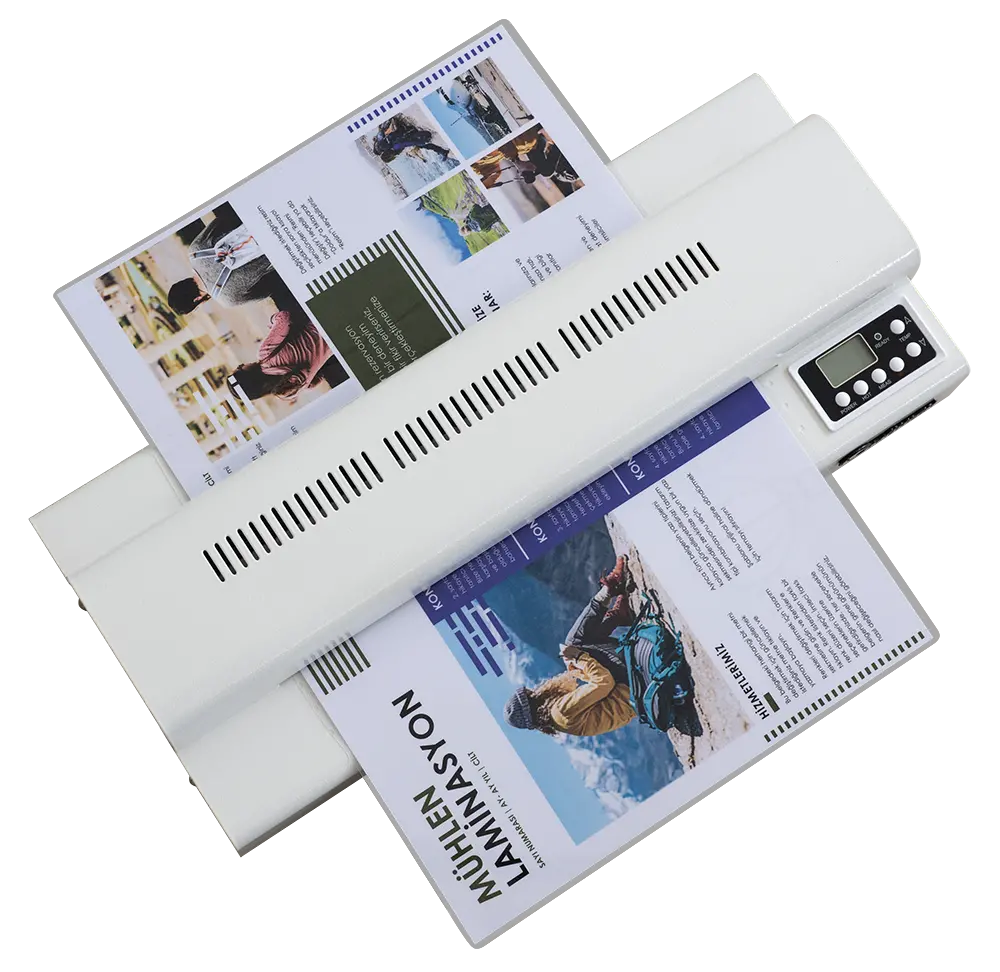
A4 models only laminate A4 and smaller; A3 models handle both. Even if A4 seems enough today, an A3 need may arise later, so choosing A3 is a common approach when there is no significant price difference.
Number of rollers
Two-roller models suit occasional use. Models with four or more rollers distribute heat more evenly and reduce the risk of bubbles and creases in heavy use.
Warm-up time
This is decisive for businesses that switch the machine on and off many times a day. Fast-heating models shorten waiting time.
Supported film thickness
If you will do thick lamination such as menus and cards, check the maximum micron value the machine supports.
Cold lamination support
Heat-sensitive prints (some thermal and inkjet output) require cold lamination. If you need it, choose models with this feature.
03
Lamination or Print Film Lamination?
The two terms are often confused. In practice the distinction is:
Lamination
is a coating made with pouch or roll film that covers both sides of the document and leaves a film margin at the edges. The document is fully sealed and protected against water.
Print film lamination
is a thin film coating usually applied to the surface of covers, boxes and brochures in print work. The goal is not only protection but also a matt or gloss finish.
Print businesses in Izmir mostly use both applications. Which model is suitable for which application is stated in the technical descriptions on the product pages.
04
Consumables: Laminating Film and Pouches
The quality of the film affects the result as much as the machine's performance. Points to watch:
Size match
The pouch should be a few millimetres larger than the document on every edge; otherwise the edges stay open and protection is incomplete.
Micron value
Low microns give a thin, flexible result; high microns give a thick, rigid one. High values are preferred for menus and cards, medium values for archive documents.
Surface
Gloss film makes colours more vivid; matt film reduces glare and improves readability.
Compatibility
The film must be within the thickness range the machine supports. Film outside this range causes jams and build-up on the rollers.
05
Delivery and Support in Izmir
Mühlen products are shipped to every province of Turkey, including Izmir. For product selection, comparing technical specifications and the ordering process, contact us via our contact page.
If you are unsure which model to choose, simply tell us your intended use and approximate daily laminating volume; we can review suitable models for your needs together.
06
Frequently Asked Questions
Do you ship laminating machines to Izmir?
Yes. Our products are shipped to every province of Turkey, including Izmir. For order and delivery details, contact us via our contact page.
Should I buy A4 or A3?
Decide based on the largest document size you will laminate. If you will only laminate documents and ID cards, A4 is enough. For posters, menus, display board visuals or print work, you need A3. A3 models can also laminate A4 documents.
What film thickness does a laminating machine use?
It depends on the model. The supported micron range is stated on every product page. High microns are preferred for thick lamination such as menus and cards, medium values for standard documents.
Why do bubbles form after laminating?
There are three common causes: starting before the machine is fully warmed up, using film outside the thickness range the machine supports, and laminating a damp document. Working after the warm-up time and with film of the right micron usually solves the problem.
Can heat-sensitive prints be laminated?
Some thermal and inkjet prints can be damaged at high temperatures. For such work, choose models with cold lamination support.
Are lamination and print film lamination the same thing?
No. Lamination protects a document by sealing both sides; print film lamination applies a thin film to the printed surface to give it a matt or gloss finish. Print businesses use both.
Which model is suitable for a print shop?
For businesses that will run all day without interruption and laminate A3 and larger, professional fast-heating models with four or more rollers are suitable. You can compare technical specifications in the laminating machines category.
Ordering to Izmir is easy
Our laminating machines are shipped to every province of Turkey, including Izmir. If you are not sure which model suits your work, tell us your intended use and approximate daily laminating volume, and we will review suitable options together.